
Rising labor costs, excessive pesticide waste, uneven crop protection and missed pest control windows have become the biggest obstacles limiting global farm revenue growth. For decades, most small and medium-scale farmers relied on manual backpack sprayers or tractor-mounted spraying equipment to protect crops from pests, weeds and fungal diseases. However, these traditional farming methods not only consume massive manpower and chemical inputs, but also easily lead to yield losses caused by delayed or uneven pesticide application.
Agricultural spraying drones have emerged as one of the most cost-effective precision farming tools to solve these long-standing agricultural pain points. By delivering GPS-guided autonomous flight, ultra-low-volume atomization spraying and intelligent terrain adaptation technology, modern farm drones help growers slash operational costs, boost field working efficiency and significantly lift overall crop yield and profit margin. In this detailed guide, we break down the core advantages of drone spraying, practical benefits across mainstream crop types, and how you can maximize your return on investment by choosing reliable, fully inspected agricultural drone equipment.
1. Key Pain Points of Traditional Manual Spraying Restricting Your Farm Profit
Before exploring how smart drone technology upgrades agricultural operations, it is necessary to understand the hidden costs and risks brought by conventional spraying modes that quietly erode your farming revenue:
1.1 Severe Labor Shortages & Soaring Manpower Expenses
Manual pesticide spraying is physically demanding, high-risk seasonal work. In most agricultural regions worldwide, skilled farm workers are increasingly scarce during peak pest prevention seasons. A single skilled laborer can only finish spraying roughly 3 to 5 acres per working day with a backpack sprayer, while temporary workers require wages, transportation and accident insurance costs. For a 200-acre farm, you may need to hire 8–10 seasonal workers to complete spraying within the optimal disease prevention window, creating a huge recurring labor cost burden each planting cycle.
1.2 20%–35% Pesticide & Water Waste Caused by Uneven Spraying
Traditional ground spraying leads to severe chemical drift, surface runoff and repeated over-spraying. Statistics show that only less than 55% of pesticides applied via manual spraying can effectively adhere to crop leaves, while most chemicals flow into soil or drift to surrounding areas, wasting your farm input budget and triggering potential environmental compliance risks. Manual spraying consumes up to 450 liters of water per hectare, which brings huge resource pressure for farms located in drought-prone regions.
1.3 Delayed Pest Control Causes Irreversible Crop Yield Loss
Pest outbreaks often spread rapidly within 2–3 days. If you cannot finish large-area spraying within the optimal time window, pest infestation will spread across the whole field, directly cutting crop yields by 10%–20%. Tractors and manual sprayers cannot access waterlogged, terraced or muddy farmland after rainfall, which means growers are very likely to miss the best crop protection period and face massive economic losses.
1.4 High Safety Risks for Farm Operators
Manual spraying requires long-time direct contact with toxic pesticides, which may trigger skin allergies, respiratory poisoning and long-term chronic health damage. For family-owned small farms, worker safety accidents will bring unexpected legal and compensation costs, further squeezing your farming profit margin year by year.
2. How Agricultural Spraying Drones Boost Farm Efficiency & Cut Operating Costs
Agricultural spraying drones perfectly solve all the above pain points of traditional farming, bringing measurable cost savings and efficiency improvements for global crop growers:
2.1 Upgrade Spraying Efficiency by 30–50 Times, Secure Optimal Farming Timing
A single high-capacity agricultural drone can complete spraying work covering 150–300 acres within one working day, equivalent to the daily workload of more than 30 manual spray workers. Supported by GPS automatic route planning technology, drones can operate day and night under stable weather conditions, helping you finish large-area pest prevention within 24 hours once pest warnings are released. Even for irregular plots, terraced fields and muddy wetlands that tractors cannot enter, intelligent agricultural drones can achieve precise, uniform spraying smoothly.
2.2 Cut Pesticide & Water Consumption by Up to 30%, Reduce Farm Input Costs
Equipped with high-precision atomizing nozzles, agricultural spraying drones convert liquid pesticides into tiny uniform droplets. Driven by downward rotor airflow, chemicals can fully penetrate dense crop canopies and adhere to both sides of plant leaves, greatly improving pesticide utilization efficiency. Most farmers achieve a 20%–30% reduction in pesticide usage after switching to drone spraying. Ultra-low-volume spraying technology cuts water consumption by over 90%, greatly saving resource costs for dry-region farms.
2.3 Slash Long-Term Labor Dependency & Recurring Labor Expenses
You only need one trained operator to control multiple agricultural drones from field edges, completely eliminating the need to employ dozens of seasonal spray workers. Many commercial farms record a 40%–60% drop in annual labor expenditure on crop protection after deploying drone spraying systems. For small family farms, drone equipment frees elderly growers from heavy manual farm labor, allowing operators to manage larger planting areas with fewer staff members.
2.4 Improve Operational Safety & Avoid Unexpected Economic Risks
During the whole spraying process, operators only need to set flight routes and prepare pesticide liquids at field boundaries, with zero direct exposure to toxic agrochemicals. This working mode fundamentally avoids pesticide poisoning accidents and related compensation disputes, protecting your farm’s financial stability and long-term sustainable operation.
3. Application Advantages of Agricultural Spraying Drones for 3 Core Global Crop Types
The profit growth brought by drone spraying differs slightly according to crop varieties. We sorted out practical field benefits for rice paddies, fruit orchards and sugarcane plantations, the three most mainstream high-value crops around the world:
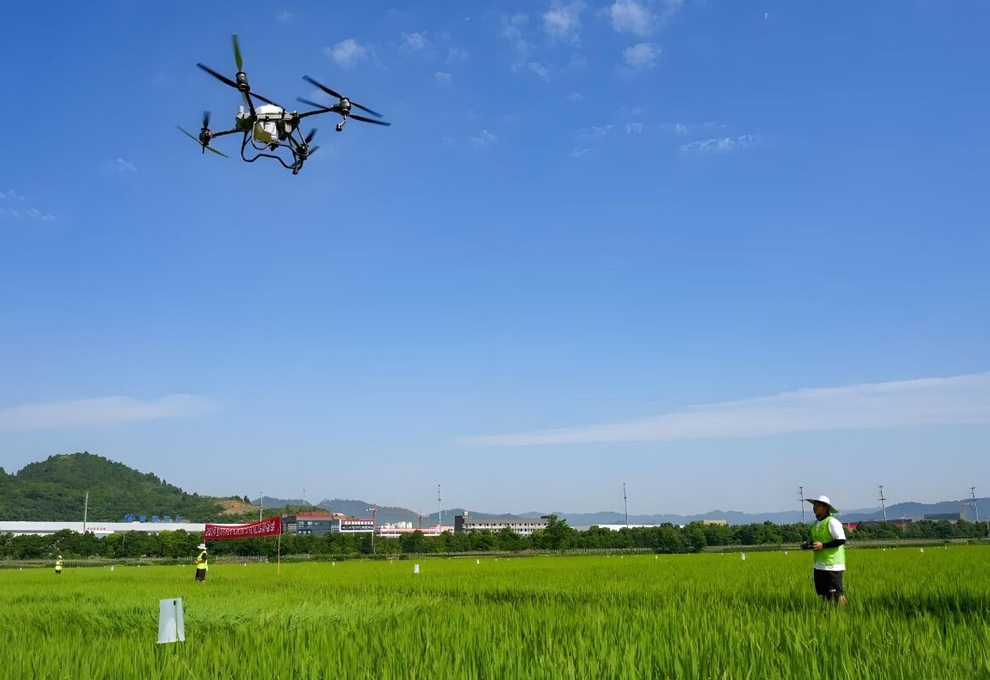
3.1 Rice Paddy Farming: Stable Yield Guarantee for Large Flat Farmland
Rice has two critical pest and disease prevention periods: the row-sealing stage and the heading stage. Timely and uniform spraying directly determines final rice yield. Traditional manual spraying often fails to reach the bottom of dense rice clusters, easily triggering rice blast and planthopper outbreaks.
Agricultural drones use downward rotor airflow to send pesticide droplets deep into rice stalks, reducing crop disease incidence by over 25%. Multiple rice planting cooperatives across Southeast Asia have achieved a 10%–15% rice yield increase after adopting drone spraying, with total annual agricultural input costs reduced by roughly 28%.
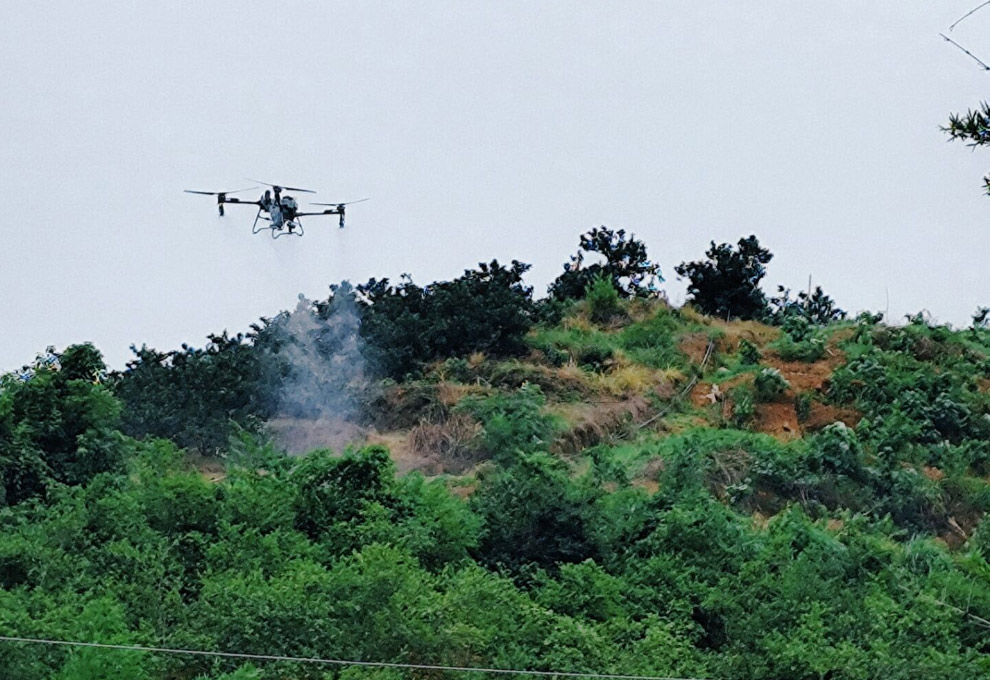
3.2 Hilly & Terraced Orchards: Solve Long-Standing Spraying Difficulties
Most fruit orchards are built on sloped, uneven terrain where tractors cannot drive safely, and manual sprayers can hardly cover the canopy of tall fruit trees. Agricultural drones equipped with terrain-following radar will automatically adjust flight height according to land fluctuations, ensuring consistent spraying volume for fruit trees of different heights.
Citrus, grape and mango orchard growers can save up to 40% on pesticide and fertilizer costs with drone spraying. Even better, balanced disease control greatly improves fruit quality, helping agricultural exporters meet strict EU and North American agricultural residue standards and gain higher purchase prices for farm products.
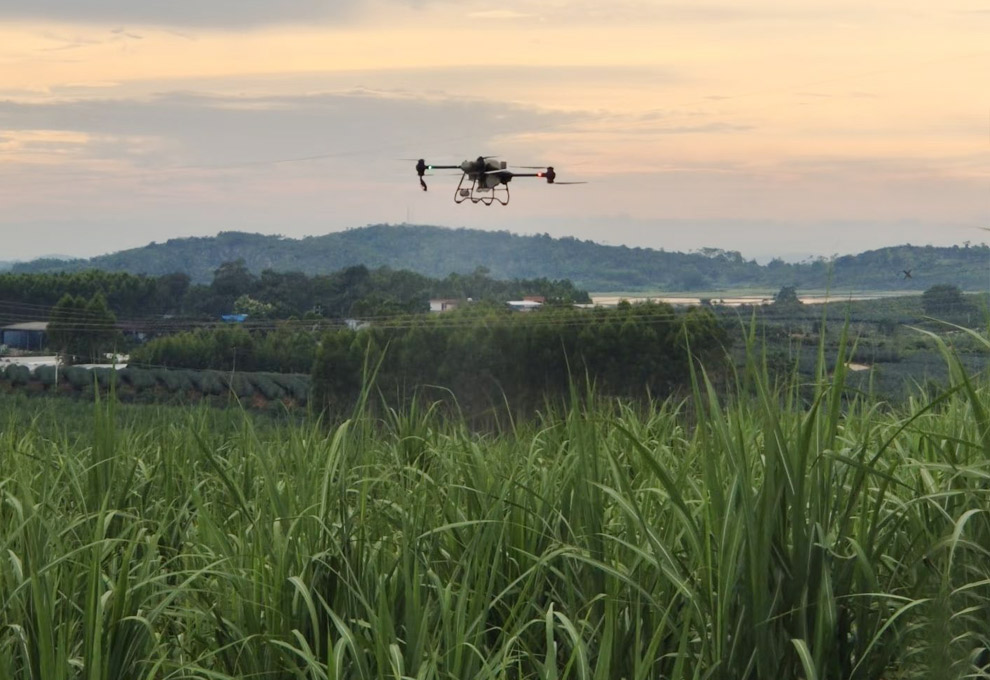
3.3 Sugarcane Plantations: Reduce Late-Stage Pest Losses for Tall Crops
Sugarcane can grow more than 2 meters tall in the late planting period, making traditional ground spraying almost impossible. Manual spraying can only cover the upper part of sugarcane stalks, which often leads to frequent borer pest damage and huge yield losses.
Drone spraying evenly covers the entire sugarcane canopy from above, cutting pest-caused yield losses by 6% to 12.5 tons per hectare. Field statistics from South African sugarcane cooperatives show that each hectare of sugarcane farm can gain an extra net profit of around $450–$500 every year after adopting drone spraying, and most farms can recover their drone investment within 1 to 1.5 planting seasons.
4. How to Maximize Your Farm ROI With Suitable Agricultural Drone Solutions
Selecting drone equipment matching your farm scale is the core way to shorten investment payback cycles and maximize agricultural profit growth:
- Small family farms (under 100 acres): Compact, easy-to-maintain agricultural drones with medium liquid tanks are your best choice. These models feature simple operation, low maintenance costs and flexible transportation between scattered plots, enabling independent farm spraying without outsourcing agricultural services.
- Medium commercial farms (100–1000 acres): High-capacity autonomous spraying drones support batch flight task planning and fast battery replacement to boost daily operating efficiency. Supported by complete spare parts supply and global remote technical after-sales service, these devices guarantee continuous stable work during peak pest prevention seasons.
- Large-scale plantations & agricultural service providers: Modular agricultural drone systems support multi-device collaborative operation, and can be expanded to seeding, granular fertilizer spreading and crop health mapping functions, creating multiple profit channels beyond traditional pesticide spraying services.
Our company supplies fully tested, stable agricultural drone equipment, matched with global spare parts delivery and professional remote technical guidance. Every drone unit will pass strict flight performance inspection and parameter calibration before delivery, effectively lowering your upfront equipment investment risk while helping you enjoy cost-saving, yield-boosting precision farming benefits.
Conclusion
Agricultural spraying drones are no longer high-end gadgets exclusive to large plantations, but essential investment equipment for every grower who wants to stabilize and expand farm profit margins. By cutting labor and chemical input costs, securing optimal pest control time windows and lifting crop yields via precise uniform spraying, drone technology transforms traditional high-cost, low-efficiency farming into sustainable, high-return agricultural management.
Whether you run scattered small farmland, terraced fruit orchards or large cash crop plantations, customized agricultural drone solutions help you spray smarter, reduce resource waste and boost long-term farm revenue growth.